Showing posts with label OA advocacy. Show all posts

Thursday, 9 May 2013

Are publishers "the enemy"?


  This interesting issue came up (again) at the Author ID Tutorial delivered within the 4th COAR Annual Meeting in Istanbul - and it might be useful to devote a couple of reflections to it here. This Author ID Tutorial was jointly delivered on May 8th by Titia van der Werf from OCLC and myself as part of an attractive set of four tutorials at the COAR event - with the selected topics for the tutorials being as good a hint on the way things are evolving around repositories as the workshops themselves.

ORCID was big on the Author ID tutorial, to the extent that the timeschedule for the activity had to be updated on the spot in order to make room for the large number of questions and reflections prompted by the ORCID presentation. I'd like to address one of these questions more thoroughly here, namely the reluctant attitude some very qualified colleagues show towards ORCID due to the fact that the initiative seems very much publisher-driven - this making it probably not that interesting for the scholarly community.

This is again about the antagonism between publishers and the academia, and about whether both communities may at some point overcome such antagonism - real or perceived, it does not make much difference - in order to jointly work for pursuing a common benefit. This discussion is certainly interesting since it goes to the heart of a critical issue that has traditionally prevented a deeper implementation of Open Access, namely the fact that both publishers and Open Access community see each other as "the enemy". Mike Taylor - to mention just one inspiring example - regularly writes in an eloquent fashion about the reasons why the scholarly community may consider publishers to be the enemy of knowledge dissemination. However, same way as a certain degree of (informal) agreement was reached at the COAR event that the fight between advocates of Green and Gold OA is a pointless diversion of energy and will only harm their common objective, it could very much be argued that making emphasis on the differences and the misbehaviours over the good practices in collaboration may result in blocking win-win cooperation opportunities.

It is true that publishers such as Elsevier and databases such as the TR Web of Science or Scopus are a big driver behind ORCID - although the fact that over 130,000 researchers worldwide have chosen to individually register their ORCIDs as of May 3rd should not be overlooked either. It is evident too that a widely implemented successful persistent author identifier scheme will benefit publishers very much - but it will benefit institutions and especially authors even more. There was again an agreement at the author ID tutorial that this is something that needs to be done, and when examining the wide range of previous attempts to achieve the goal of author and work identification and disambiguation, it becomes clear that having publishers involved in the initiative provides it a significantly larger chance of succeeding.

I have repeatedly written here about the encouraging effort the EC-funded PEER project did in bringing together publishers and Open Access repositories and how advisable it would be to try to further explore opportunities for collaboration - some of which are indeed being exploited, see for instance Wiley's direct involvement in the JISC-funded PREPARDE project for research data publishing. ORCID is certainly one of these opportunities and with all due respect to constructive dissent, it would be an exercise in shortsightedness to let it slip away.


Sunday, 31 March 2013

Could the so-called Gold Rush result in Green reinforcement? (II)


  A post was published last December at the UKCoRR blog examining the question of whether Green Open Access could become mainstream at Higher Education Institutions (HEIs) as a result of the policies resulting from the Finch report and aiming to drive the scholarly communication model towards a Gold OA-based one. Buiding on the discusions held at the webinar "The Role of Institutional Repositories after the Finch Report" organised by the Repositories Support Project earlier that month, the post highlighted the role IR managers were to play in explaining the different options for policy compliance at HEIs and the relevant role deposit into institutional repositories would acquire as a result of the economic impossibility to make the whole institutional research output available via Gold Open Access.

A few months later, at a time when the RCUK Open Access policy is about to come into effect, preliminary strategies for ensuring compliance are being designed at HEIs. Driven by the RCUK policy statement that "The RCUK OA Block Grant is principally to support the payment of APCs. However, Research Organisations have the flexibility to use the block grant in the manner they consider will best deliver the RCUK Policy on Open Access, as long as the primary purpose to support the payment of APCs is fulfilled", institutions are wisely investing part of the Block Grant funding on enhancing their Green Open Access infrastructure (including human resources) and making sure their institutional repository will be ready to provide support for Open Access dissemination purposes to all researchers whose publications are not awarded Gold OA funding.

In an even more inspiring realisation of this leveraging policy, the Spanish National Research Council (CSIC) released last week the requirements it will apply for authors to be eligible for Gold Open Access funding (Spanish only). With the caveat that "due to limited resources, just one article per author will be allowed per year", these include the need to deposit the author's research outputs published in the last three years into the Digital.CSIC institutional repository in three months time since the funding for the payment of APCs has been awarded.

Compliance monitorisation is becoming a key concern at HEIs as a result of these policies and attempts at having pilot systems in place for ensuring the reporting tools for policy compliance are available will shortly be carried out at pioneering institutions. In the meantime the whole move towards Gold and Green Open Access remains a daring experiment whose outcome -including the way researchers in different domains are willing to follow the policy guidelines- will be very interesting to follow in upcoming months. The Global Research Council meeting in Berlin next May 2013 will provide a good opportunity to agree on an international action plan for implementing Open Access to Publications – Open Access implementation is one of only two items on the agenda.


Friday, 22 March 2013

Preaching to the converted...


  Sometimes when you try to argue on controversial issues - say for instance you consider that the coverage of sex abuse in the media is biased and lacks objectivity - you'll be accused of not being interested in figting sex abuse. Regardless of how frequently found around the place these days, it's the sort of argumentation that will drive you mad, since its sole purpose seems to be to avoid discussing the issue itself.

Open Access is no exception in this regard. I do not think my personally being pro-Open Access or anti-Open Access should be part of the discussion here, but you may check posts below should this paragraphs raise any doubt about it. Incidentally I happen to be a physicist and have had the opportunity during my extensive Open Access dissemination activities (and have taken great pleasure in it) to discuss it with dozens of researchers from all fields, possibly hundreds of them, many of them Open Access-friendly, some of them reluctant, nearly all of them interested in a sensible dialogue on the future of scholarly communication.

As a result of these experiences, plus again lots of work for implementing OA at institutional and cross-institutional level, there are two relevant points I would like to make in this post:

1) Librarians ('shambrarians' would probably be more accurate) should refrain from going too far in telling researchers how to perform their professional activity. Librarians/shambrarians usually do not know enough about research and scholars can easily perceive that out of a five minute conversation. This is possibly the main reason for the huge divide among both communities - and the one that does actually explain why repositories are nearly empty. Underpopulated repositories is by no means just a 'keystroke issue' I'm afraid (although solving the 'keystroke issue' will help of course). Asking for strong mandates has lately become a mantra from the 'shambrarian' community, but when you listen to researchers' thoughts about this many of them are far from being convinced this is the right way to deal with Open Access implementation.

2) Open Access success is mainly a technology issue and not a policy one (or not to such extent anyway). Ideally the technology and policy strands should work in parallel, but technology can do without policy, whereas the opposite is not true. If you try to sell researchers an Open Access mandate for depositing their papers on the equivalent of a shack in architectural terms, they will very likely laugh in your face (this is the story of the last 20 years Stevan Harnad often talks about). You need to have a solid technical foundation with solid added-value services for talking researchers into Green Open Access. And that is presently far from being a fact. Regrettably far, I feel obliged to add. Not only that, it is kept far from being a possibility by the regular advocates ignoring most about technology and making emphasis on what they do know about: dialectics. I will not mention particular examples here, since it's not the goal of this post to get personal, but if Open Access is to succeed, the debate should clearly become more technical and less political.

No offence meant in any of this, I should warn. I read as much as I can of what gets published on OA, especially blogposts, and there's not too much I like out there I must say. But I do usually keep my opinions to myself since I believe there may be many different ways for OA to succeed - and fights between passionate Green OA supporters and their critical friends is certainly not one of them.

... and preaching to the non converted


  After quite a long time away from this blog due to various circumstances – with work overload probably being the most convincing one – I will try to catch up with various threads in the next day ot two – and I shall start the attempt with an answer to this request for explaining what Open Access is and what its aims are I was delivered from the interesting comments section of this “Whoops! Are Some Current Open Access Mandates Backfiring on the Intended Beneficiaries?” post by Kent Anderson at The Scholarly Kitchen blog. This is my answer – I tried to keep it as concise as possible, apologies if it may still be a bit long.


I am probably too busy trying to overcome the numerous challenges that stand in the way of Open Access implementation myself to provide a too detailed and accurate description of what Open Access is and what its aims are, but I'll give it a go. Let me start by quoting the Berlin Declaration on Open Access to Knowledge in the Sciences and Humanities (2002):

"The Internet has fundamentally changed the practical and economic realities of distributing scientific knowledge and cultural heritage. For the first time ever, the Internet now offers the chance to constitute a global and interactive representation of human knowledge, including cultural heritage and the guarantee of worldwide access".

According to this, Open Access means ensuring this possibility is realised, and worldwide dissemination of research outputs should indeed be a shared goal for institutions (and its libraries) and for publishers. It means that any researcher anywhere in the world may have the opportunity for the first time in history to freely share her research results (and this includes research data) with the whole research community and beyond. Whether this is achieved through the so-called Gold route (Open Access or hybrid journals) or via Open Access repositories (the Green route) is secondary to some extent - although not of course if business models are our sole concern here.

Open Access deals with the have and the have-nots (which does not just mean developed vs developing countries, but rather privileged vs underprivileged researchers in terms of having or not an institutional coverage for accessing the research information they require for carrying out their own research). And Open Access deals with whether a freely available author's final peer-reviewed manuscript might provide a useful alternative to the much-preferable version of record for those underprivileged researchers who can't or won't afford paying the fees required to read the papers that will allow them keep up-to-date with advances in their own research area.

Research funders are well aware of the challenge, especially those in the area of biomedical research, and Open Access mandates are their attempt to tackle the access issue in an area where many institutions both in rich and poor countries lack the (quite substantial) budgets required to provide their reseachers a comprehensive access to publications in toll-access journals. What about publishers? They are indeed adapting their business models to fit the Gold route by taking Article Processing Charges from authors as a prerequisite to making research papers available Open Access so they can meet the funders' mandates – which is fine. But this adaption to Open Access has not at all improved their image in the eyes of institutions (and many researchers in them), who suspect some not-so-subtle form of double-dipping is taking place since they still need to pay for their journal subscriptions on top of the APCs.

What could publishers then do to stop the fight?

The European PEER Project was a 3-yr STM Publisher Association-lead attempt to assess the impact of Open Access repositories on the 'European Research ecosystem'. This was technically carried out by delivering a large amount of final peer-reviewed author manuscripts into a cross-European institutional Open Access repository network.

Publisher participation ensured the right research article version was deposited, and the whole exercise was also useful for them: not only they were able to become aware of the relevance of sufficient metadata (a concept that CrossRef has later extended among the wider publisher community), but also to harmonise their interoperability standards through the use of the NLM DTD. Furthermore, the conclusions of the PEER project assessment carried out by CIBER Research Ltd was that not only publishers were not harmed by Open Access repositories, but rather on the contrary the paper download figures from journal pages at publisher websites were much improved by their availability as final manuscripts at repositories (since it's the version of record any researcher will prefer to read and cite unless of course they have no means to accessing it).

PEER was a one-time exercise, but it also delivered a proof of concept for cooperation between publishers and institutions in order to provide researchers the service they require for meeting the funders' mandates they are subject to. And in fact some sensible publishers are still interested – and taking subsequent steps in this direction – in delivering their authors the deposit service they require to meet the mandates. The way these sensible publishers see it, this is a means to offer researchers competitive advantages at journal selection time and will ensure a steady number of submissions in an increasingly competitive market framework for journals.

In the meantime the institutional Open Access community (which reached a critical mass quite a long time ago) is taking steps to ensure the repository systems become fit for purpose in order to meet funder requirements in terms of offering OA to the outputs of research projects funded by them. There are indeed technical as well as cultural/political challenges, in fact quite a number of them, but there is also a sustained and persistent effort to figure out the best ways to gradually address them. Institutional Research Committees are suddenly becoming aware (and this is the concern comment #2 addresses) that institutional research publishing budgets won't reach for providing Gold Open Access via payment of APCs for the whole institutional research output, so they're instead turning their eyes to their institutional Open Access repositories and wondering whether it could be the way of meeting funder mandates in a much cheaper fashion. At the same time, some funders are starting to rule hybrid journals out of their mandates for compliance purposes on order to avid the abovementioned risk of double-dipping.

The landscape keeps hastily evolving and it seems further adaption will be required both from publishers and institutions. This could ideally happen through cooperation and not through struggle, but there seem to be too many prejudices and too little efforts out there for a constructive dialogue to take place in a sustainable way.


Thursday, 13 September 2012

Steady progress of Open Access at Kenyatta University and beyond


  As shown in the Open Access trend worldmap in the previous post, Kenya may well be the country where a strongest impulse towards Open Access implementation in a coordinated, cross-institutional way is currently under way. A high number of Kenyan universities are taking steps to issue Open Access policies and to set up their institutional repositories. These include Maseno University, which has recently become the first signatory of the Berlin Declaration on Open Access in Kenya, Kenyatta University, which is about to adopt an institutional Open Access policy and is already running its own IR, Moi University, University of Nairobi and JKUAT, which has recently issued a Digital Repository Policy document so well drafted that it may become a source of inspiration for many other institutions in the continent.

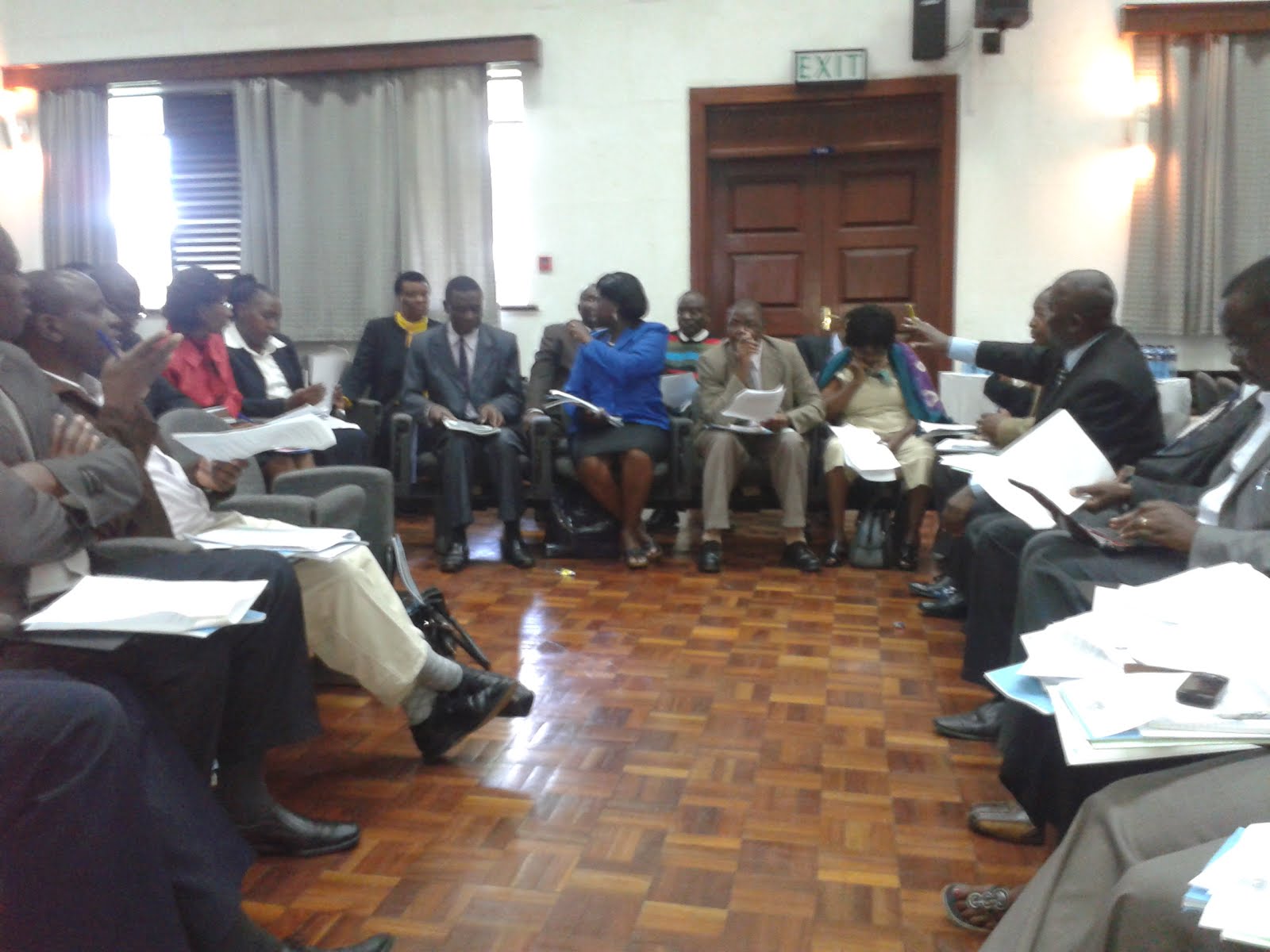
Efforts during the Open Access activity week at KU were aimed to train the Kenyatta University IR and ICT staff and KU researchers and Management Board on Open Access and on how to deal with the new institutional repository which is being developed by the University Library. The 2-day seminar held at the Kenya School of Monetary Studies (KSMS) -organised by Reuben Njuguna, KU Dept. of Business Administration- provided the summit in the OA advocacy sessions held during the week. The first day of this event was devoted to introducing Open Access and its current worklines to the KU Management board, with talks by Gitau George Njoroge, Director of KU Library, Iryna Kuchma, EIFL Open Access Programme manager, William Nixon, Digital Library manager at the University of Glasgow and Brian Hole, manager of the Ubiquity Press Open Access publisher. The second day a round of group discussions was held among the KU VCs and professors in order to establish the guidelines for a draft Open Access policy for KU, which is now under review by the KU Law Department in order to make it final.


In the meantime KU legacy dissertations are starting to be digitised in order to provide full-text files to the metadata-only items that presently constitute the largest part of the KU IR. Metadata sets associated with different document types are also undergoing an update so they'll fit the requirements for providing a thorough description of the KU research output. Once this processes reach an advanced state, an advocacy campaign for further dissemination of the advantages the IR provides the KU community will be carried out at KU Schools. Ideally this should result in KU researchers and professors having the opportunity to offer their online research profiles and publications in the same way as Dr. Erik Nordman, a GVSU researcher in environmental economics who is currently spending a sabbatical year at KU School of Environmental Studies and whose publications are easy to track at his home ScholarWorks@GVSU repository.

The setting up of the KU IR will not only provide visibility for the KU scholarly output, but will also help introducing better description procedures for the Faculty members' publications. Once it gets consolidated as a fully operational reporting tool, the IR will also become the default platform for collecting the KU research output, including the journals internally published by KU Schools and Departments which are currently impossible to track online. If the IR Project at KU is able to keep its cruise speed and meet its strategic goals, the Kenyatta University Library should in the mid-term develop a research information management system as inspirating as its actual building.


With the ongoing EIFL-funded Project “Knowledge without boundaries: Advocacy campaign in Kenya for OA and institutional repositories” providing a solid platform for promoting Open Access and IRs in the country through the Kenyan Library and Information Services Consortium (KLISC), a national network of well-populated institutional repositories could soon become a reality, showing the way ahead to other East African countries.

Friday, 24 August 2012

[Open Access] Spotlight on Nairobi


  Next week a couple of interesting Open Access-related events will take place in Nairobi - making the Open Access spotlight (partly) shift away from Europe, North America and the developed countries into Kenya. It's not the first time interesting Open Access-related events happen in Kenya - a very successful BioMed Central-organised 1st Open Access Africa (OAA) Conference took place in Nairobi in Nov 2010.


Prior to briefly describing these activities, it may be useful for introductory purposes to have a look at this interesting map featured above - courtesy of Benjamin Hennig and his Social and Spatial Inequalities Research Group at the University of Sheffield, UK, based upon data kindly supplied by SPARC. The map shows a ponderated image of the world countries according to the number of Open Access dissemination activities they organised during the Open Access Week event in 2010 (the picture actually remained very much the same for OAW2011). When we look at the current geographical distribution of Open Access repositories worlwide at the OpenDOAR directory, there is a massive bias towards the developed world. However, when we check which countries are doing better in terms of promoting Open Access and establishing their own repository networks, we see both India and Kenya at the top three. In physics terminology, in order to properly describe a situation, you should both account for the actual value and the gradient of such value, gradient meaning its rate of change. So even if values may presently not look too encouraging, they will eventually change as a result of persistent efforts to drive such change.


The abovementioned Open Access activities to be held next week at two Kenyan universities in Nairobi are two good examples for those drivers for change. Kenyatta University will be hosting an Open Access workshop for raising institutional awareness of its Open Access Repository Project. This will be achieved by running different sessions along the 1-week Open Access advocacy seminar for all involved stakeholders within the University: Library and ICT Staff, Researchers from various disciplines and the Kenyatta University Management Board. Also next week, the University of Nairobi will be holding a one day workshop for the University Management Board on Open Access and institutional repositories, paying especial attention to the policy strand. This event is part of the EIFL-funded Project “Knowledge without boundaries: Advocacy campaign in Kenya for OA and institutional repositories”.

Maybe a bit more attention could be paid to Open Access advances in developing countries (even if stakeholders such as BMC and OKFN are already doing it, as well as UNESCO, IFLA and of course EIFL), since it may best serve those countries where severe restrictions to research information apply. Internet connectivity conditions permitting -still a pending issue in most African contries despite recent improvement- there will be some further reporting next week from Nairobi.


Tuesday, 22 May 2012

EIFL Workshop on Open Archives in Monastir


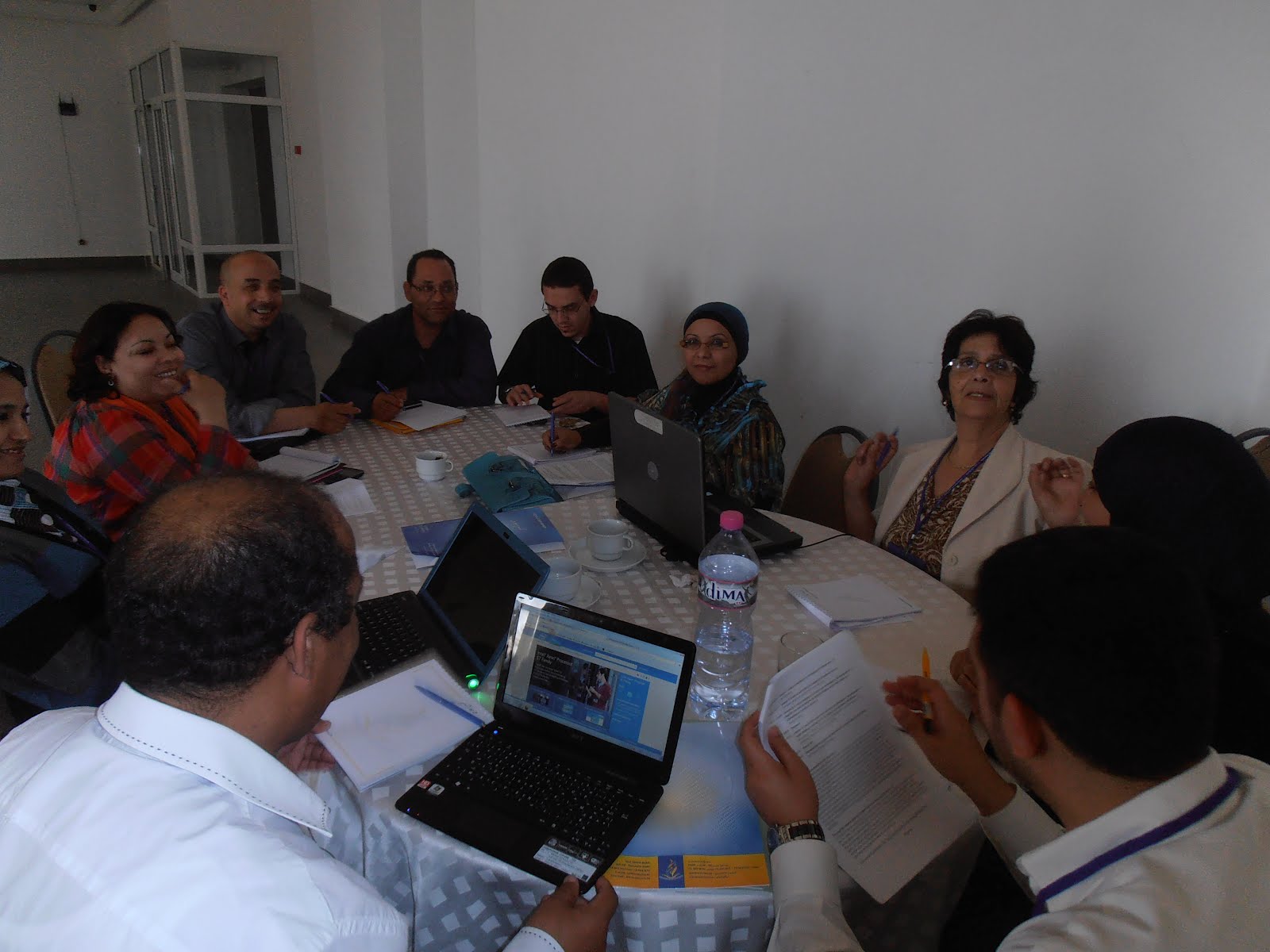
  GrandIR has just taken part in the 'Atélier sur les archives ouvertes' organised last week (May 14-15) in Monastir, Tunisia, by EIFL for promotion and dissemination of Open Access and Open Archives in the Maghreb countries. This workshop was held in the framework of the European Tempus ISTeMag Project for improving access to Scientific and Technical Information in the Maghreb universities. Led by the Université Libre de Bruxelles, this project features twelve universities and research centres in Tunisie, Algeria and Morocco among its partners. As a consequence, the Open Archives workshop in Monastir was well attended by over 30 Maghrebi librarians, developers, research officers, project coordinators and policymakers from all three countries.

Iryna Kuchma, EIFL Open Access Programme Manager, designed a comprehensive programme for the event along with the Tempus project coordinators. The programme covered all aspects of Open Archives, from its benefits to research activity to the obstacles faced for seting them up, from the strategies to develop a repository to copyright, marketing, policies and best practices. In order to provide the expertise, EIFL recruited a few European colleagues who delivered presentations and acted as facilitators for the group debates. Among these experts were Jean-François Lutz, Head of Digital Library at the Université de Lorraine and Pablo de Castro, Director of GrandIR.

There were several group sessions along the 2-day event, in which representatives of various professional profiles from different institutions -and often different countries- engaged in a lively debate and discussed their complementary approaches to specific aspects of Open Access policies, content gathering or marketing activities. Since ISTeMag has already held previous meetings to examine the different aspects of access to scientific and technical information (the most recent one took place last November in Algiers), workgroups discussions were in some sense a follow-up to a more general debate on access.

A Moroccan colleague kindly shared a ranking of universities in the Maghreb countries along the event - featured below. It's interesting to see that there are six Tunisian universities in the top ten, and that three of these top ten-ranked universities are partners in the Tempus ISTeMag Project (two Tunisian, Sfax and Monastir, and one Moroccan one, Marrakesh-Cadi Ayyad). It's also worth mentioning that having an open archive or institutional repository in place will significantly improve the position of a university in these rankings (see also in this regard the Top Africa section in the Web Ranking of World Universities released every six months by the CCHS-CSIC Cybermetrics Lab in Madrid, in which Maghreb universities could probably do better in a global African context).


There are already a few running Open Access repositories in Maghreb countries, with many more in project or in pre-production stages, but there is still a long way to go until the region reaches the level of infrastructure available in other countries in the continent such as Egypt, Ghana or Kenya. The main effort in terms of research output Open Access dissemination is currently being made on theses and dissertations. In fact the three national coordination organisations, the IMIST (Institut marocaine de l'information scientific et technique) in Morocco, the CERIST (Centre de Recherche en Information Scientifique et Technique) in Algeria, and the CNUDST (Centre National Universitaire de Documentation Scientifique et Technique) in Tunisia have already started building their national platforms for dissertations: Toubk@l in Morocco and in-progress platforms for Tunisia and Algeria. This policy of focusing on theses has similarly been aplied at European universities, but then repository managers should keep in mind they're aiming to collect research papers and other high-value institutional research outputs as well, so their visibility will be enhanced as a result. Dissertations being intellectual property of the universities and not always requiring to ask researchers for their permission for offering them online, part of the challenges of Open Access dissemination are rather easily tackled, but then there is no Open Access advocacy carried out and it won't be so easy to extend content gathering to the materials most valued by researchers everywhere.

Efforts like the Tunisian E-doc Université Virtuelle de Tunis (UVT) EPrints-based repository or the Algerian Dépot Numérique de l'Université d'Alger DSpace-based archive are pioneering IR initiatives that are also being mirrored in many other institutions in the Maghreb. As a consequence of the work of this ISTeMag Group on Open Archives, a network of institutional repositories in the Maghreb universities could soon be available.