Friday, 24 August 2012

[Open Access] Spotlight on Nairobi


  Next week a couple of interesting Open Access-related events will take place in Nairobi - making the Open Access spotlight (partly) shift away from Europe, North America and the developed countries into Kenya. It's not the first time interesting Open Access-related events happen in Kenya - a very successful BioMed Central-organised 1st Open Access Africa (OAA) Conference took place in Nairobi in Nov 2010.


Prior to briefly describing these activities, it may be useful for introductory purposes to have a look at this interesting map featured above - courtesy of Benjamin Hennig and his Social and Spatial Inequalities Research Group at the University of Sheffield, UK, based upon data kindly supplied by SPARC. The map shows a ponderated image of the world countries according to the number of Open Access dissemination activities they organised during the Open Access Week event in 2010 (the picture actually remained very much the same for OAW2011). When we look at the current geographical distribution of Open Access repositories worlwide at the OpenDOAR directory, there is a massive bias towards the developed world. However, when we check which countries are doing better in terms of promoting Open Access and establishing their own repository networks, we see both India and Kenya at the top three. In physics terminology, in order to properly describe a situation, you should both account for the actual value and the gradient of such value, gradient meaning its rate of change. So even if values may presently not look too encouraging, they will eventually change as a result of persistent efforts to drive such change.


The abovementioned Open Access activities to be held next week at two Kenyan universities in Nairobi are two good examples for those drivers for change. Kenyatta University will be hosting an Open Access workshop for raising institutional awareness of its Open Access Repository Project. This will be achieved by running different sessions along the 1-week Open Access advocacy seminar for all involved stakeholders within the University: Library and ICT Staff, Researchers from various disciplines and the Kenyatta University Management Board. Also next week, the University of Nairobi will be holding a one day workshop for the University Management Board on Open Access and institutional repositories, paying especial attention to the policy strand. This event is part of the EIFL-funded Project “Knowledge without boundaries: Advocacy campaign in Kenya for OA and institutional repositories”.

Maybe a bit more attention could be paid to Open Access advances in developing countries (even if stakeholders such as BMC and OKFN are already doing it, as well as UNESCO, IFLA and of course EIFL), since it may best serve those countries where severe restrictions to research information apply. Internet connectivity conditions permitting -still a pending issue in most African contries despite recent improvement- there will be some further reporting next week from Nairobi.


Sunday, 5 August 2012

Interesting times for Open Access


  Quite a heated discussion in Open Access circles has followed the recent release of the Finch Report on expanding access to published research findings in the UK and the endorsement by the UK Govenment and funders of its recommendation for making Gold Open Access the default standard for future scientific communication. The day after the UK Government announced it was assuming all but one Finch Report recommendations, the EC also adopted the Communication "Towards better access to scientific information: Boosting the benefits of public investments in research", in which a wider implementation of Open Access -both Gold and Green- to research publications and data was set as a goal for present FP7 and future Horizon2020 European research programmes.

Although usually welcoming its implicit support of Open Access to research outputs, the Finch Report has been heavily criticized within the Open Access movement for not acknowledging the opportunities the available OA repository network and Green OA in general offer to achieve extended access to research publications. The cost of the proposed transition to a Gold OA model was claimed to be disproportionate and most fervid critics dubbed the Finch Report a result of sheer publisher lobbying, while moderate ones pointed out the proposed transition model was unfit for international adoption, especially in developing countries.

However, proposing Gold OA as a default model for extending access to research is hardly a new argument. A couple of months ago at the PEER End-of-Project conference in Brussels -which incidentally had a wide number of publishers in the audience while practically no representatives of repository projects attended the event despite PEER involving both communities- the project managers highlighted one of PEER's main conclusions being that Green OA was not sufficiently popular among research authors and could therefore not be considered the best way for making research outputs widely available. Even if this conclusion may be considered biased and has also been extensively discussed, it is a fact that many researchers from various disciplines do not like open access repositories.

Some of the most conspicuous voices within the Open Access movement do however seem to favour [otherwise perfectly justified] protest against Green OA not being accounted for over self-criticism and analysis of what the reasons are for researchers' frequent preference for open access journals instead of repositories and what steps could be taken in order to overcome such repository shortcomings. Besides criticism of the very expensive alternatives, a clearer lobbying effort would also be desirable for explaining evidence-based advantages of Green OA and the lines the repository community is currently working at in order to improve the user experience. There are very ambitious indeed repository-related projects going on at the moment -such as the UK RepositoryNet+ or OpenAIRE in the EU- aiming to enhance currently existing repository networks so they'll best suit researchers' needs by building upon already large previous experience.

Having had the chance to extensively discuss with researchers what they do and what they don't like about repositories, there seem to be evident issues in the way these platforms have been developed that justify current distrust of them as sound research information sources by a significant numer of authors. Two of the main among these are the lack of metadata harmonisation and the lack of information about work versions filed in the repositories. Although their number is growing and various efforts are under way to improve this, still very few repositories are presently offering harmonised information about funding agencies and projects associated to specific papers or about the version of such papers that is filed in the repository. Other than that, insufficient information is available on the funder policy compliance rates and a significant effort remains to be done in the field of repository usage, where testing repository vs publisher usage for a given work could be quite revealing. All these lines are currently being dealt with by the abovementioned projects, and there will be interesting breakthroughs in coming months around repositories and Green OA.

As for Gold OA, its strong backing by funders and the Government in the UK -as well as implicitly by publishers- opens the door for a gradual transition process (to be mainly but not only tested in the UK as for now) from a subscription-based model to another one relying on Author Processing Charges (APCs), to be increasingly dealt with at institutional level. Two main shortly-arriving outcomes of this transition process should be: (i) new publishing business models for institutional funding of access to research papers -with the RSC 'Gold for Gold' initiative showing the way ahead- and (ii) some standard way of dealing with APCs at institutional level being proposed - with the JISC/Wellcome Trust call for proposals regarding a role in managing payment of Open Access APCs being a first step along that line and initiatives such as Open Access Key (OAK) starting to offer such required services.

These are undoubtedly very interesting times for following Open Access evolution -and the increasing impact of OA-related news in general-purpose media is a good evidence for that- and from a look at the detailed picture of Open Access in the UK recently provided by Nature it's not hard to conclude that Green OA and repositories are here to stay and that the transition process to a Gold OA-based publishing model is set to be a long and winding road.

Sunday, 17 June 2012

Addendum: la conferencia CRIS2012 y los sistemas CRIS en España


  Desde el punto de vista nacional, la conferencia CRIS2012 arroja algunos resultados positivos: la presencia de representantes de instituciones españolas se ha quintuplicado desde la anterior conferencia CRIS2010 de Aalborg, incluyendo en esta ocasión a la FECYT, así como centros de investigación y universidades en proceso de integración CRIS/repositorio institucional. Entre los avances pendientes, resta aún inaugurar el casillero de presentaciones en conferencias CRIS procedentes de instituciones españolas, estando la aportación nacional restringida por el momento a los euroCRIS membership meetings, donde el año pasado tanto OCU como Sigma realizaron ponencias sobre sus proyectos de desarrollo. Pese a que tanto la duración como el coste de la asistencia a estas conferencias CRIS justifican que no haya habido una presencia mayor este año, algunos de los proyectos presentados en la Jornada GrandIR sobre CRIS y repositorios celebrada el pasado noviembre en Barcelona habría podido perfectamente ser parte del programa de este CRIS2012. Esta situación de infrarrepresentación se equilibrará en todo caso en el próximo euroCRIS membership meeting de otoño a celebrar en Madrid el próximo mes de noviembre, en el que se mostrarán toda una serie de proyectos CRIS de instituciones y organismos en España.

En relación con las cuestiones técnicas debatidas en el programa del evento, cabe mencionar que España como país sigue un camino algo diverso del resto: un proyecto puntero que despierta mucha curiosidad en otros países como el CV Normalizado (CVN) basado en la transferencia de datos desde los CRIS institucionales coexiste con un nivel de implementación de CRIS aún relativamente limitado. Por un lado comienzan a menudear los proyectos de integración CRIS/repositorio para los modelos más consolidados de CRIS (GREC, DRAC, Universitas XXI), y al mismo tiempo la implantación del estándar CERIF en dichos sistemas no ha comenzado aún a producirse en el país.

No es que CERIF sea un estándar imprescindible para el desarrollo de CRIS eficientes -Italia por ejemplo tiene un indice muy elevado de implantación de CRIS institucionales y no están como norma basados en CERIF- pero a efectos de garantizar la interoperabilidad internacional y de incorporar los avances que vienen teniendo lugar en el diseño del modelo de datos de este Common European Research Information Format (incluyendo desarrollos para modelar el impacto social de una investigación o para codificar elementos adicionales de información tales como datos de investigación o research facilities o instalaciones de investigación disponibles), sería muy recomendable contar con al menos algún proyecto de ámbito nacional dedicado al análisis de requisitos para la migración de los modelos de datos actuales a CERIF.

El próximo encuentro de otoño de miembros euroCRIS puede constituir una buena oportunidad para debatir si cabría plantearse una estrategia nacional de implantación de sistemas CRIS institucionales como proveedores normalizados de información sobre producción científica a efectos de su evaluación por parte del Ministerio, de manera similar a como se planifica este proceso en otros países europeos. Funcionalidades añadidas de interés general tales como el estándar ORCID de identificación persistente de autores podrían de hecho integrarse de modo natural en una estrategia de transferencia de información científica de ámbito nacional. Sería interesante en todo caso que alguna universidad o centro de investigación en España reaccionara a la oferta del consorcio ORCID para localizar instituciones interesadas en la implantación temprana de dicho estándar como parte del proceso de consolidación del mismo. En el euroCRIS membership meeting de Madrid habrá asimismo una sesión dedicada al debate sobre identificadores que puede ser el foro ideal para debatir esta materia, dado que se prevé que para el mes de noviembre ORCID se encuentre ya en servicio.

Friday, 15 June 2012

CRIS2012 Conference in Prague: Consolidating CRIS Infrastructure in Europe and the way beyond


  A very successful 11th International Conference on Current Research Information Systems (CRIS2012) was recently held in Prague (June 6-9th, 2012) under the motto “e-Infrastructures for Research and Innovation: Linking Information Systems to Improve Scientific Knowledge Production”. A record 154 representatives from 26 countries attended the most crowded euroCRIS biennial conference ever, and the number of submissions for the conference was also the highest so far (with the UK having the largest number of representatives at CRIS2012 and Norway the best rate of submission acceptance). The usual mix of very different professional profiles (researchers, funders, research managers, research office representatives, institutional repository managers, IT managers, developers...) that makes CRIS conferences so special was even further enriched at CRIS2012 by the large number of colleagues who were attending a CRIS conference for the first time.

This event has indeed meant the maturity milestone for euroCRIS, the European Organisation for International Research Information that holds the CRIS conferences every two years (see report for CRIS2010 conference in Aalborg, Denmark at the SONEX blog). euroCRIS has just turned 10 years old as custodian of the Common European Research Information Format (CERIF) standard and as a key stakeholder in the promotion of CRIS Systems for an efficient Research Information Management in Europe and beyond.

If the UK is known to be the most advanced European country in terms of CERIF-based CRIS implementation in HEIs (see recent report from Rosemary Russell, UKOLN), holding the CRIS2012 conference in an Eastern European contry offered the opportunity to realize how the highest momentum in National CRIS System development in Europe is shifting eastwards, with running or completed projects in Slovakia, Slovenia and the Czech Republic itself *.


Official support to the CRIS2012 conference from the Research, Development and Innovation Council of the Czech Republic was in fact one of the key factors for the event being so successful, including a welcome address by the Czech Prime Minister (and President of the Research Council) at the euroCRIS membership meeting reception at Liechstenstein Palace in Prague. Last but not least, a real key contribution to a successful CRIS2012 was the brilliant event organisation provided by Jan Dvořák (InfoScience Praha s.r.o.) and his team.


One of the main outcomes of the 4-day conference was in fact the announcement of the ongoing development of a DRIS or Directory of Research Information Systems which will collect information on running or in-progress CERIF-based CRIS Systems all around the world along with their features and best practices at their implementation and management. This DRIS should serve starting projects to check out for the best solutions and find institutions they may be interested in contacting for the purpose of developing and implementing their own CRIS. CRIS implementation time is a particularly interesting area, since there are large differences among institutions where CRISs are set up, and best practices and guidelines on institutional data collection could be very useful for those universities starting up with the process.

A brief summary of the talks held along the week-long event should include (at least) three main strands as well as a reference to the evolving CERIF data model, currently at version 1.3 with in-progress work at 1.4 as presented by euroCRIS CERIF Task Group leader Brigitte Jörg. These three main strands are (i) added-value services on CRIS Systems, (ii) CRIS functionality extension to research data management and Linked Open Data and (iii) persistent identifier definition and implementation into the CERIF data model.

1. Added-value services on CRISs
As the number of both national and institutional CERIF-based CRIS steadily grows accross Europe, vendors and institutional IT services team up in order to identify new services the system could provide to researchers and institutions. Some of the proposals for enhanced CRIS interoperability and coverage were presented at CRIS2012, such as the JISC-funded CERIFy project for enabling a two-way CERIF-based data exchange between CRISs and Thomson Reuters InCites service or the 'Next-Generation CRIS' currently being developed at the Karlsruhe Institute of Technology (KIT). This project aims to extend CRIS functionality by providing Social Media features, access via mobile devices and advanced Business Intelligence tools for "making numbers talk" to research managers. Finally, semantics was often mentioned too as a relevant enhancement to CRIS systems at several CRIS2012 presentations.

2. CRIS coverage extension to research data and LOD
Research Data Management (RDM) is one of the areas where CRISs could be most useful to the international research community by enabling a systematic management of institutional research data outputs. In order to do so, the CERIF data model must however be previously extended so it's able to cover research data description and management. The CERIF for Datasets (C4D) Project funded by the JISC MRD Programme and led by the University of Sunderland in the UK is working to CERIFy research data and to enable its subsequent codification into CRISs, using marine sciences datasets and an enhanced version of the MEDIN metadata standard as a basis. Required metadata for data description were also analysed at the "Towards the integration of datasets in the CRIS environment" presentation by Italian IRPPS-CNR, which provided an overview of data archives featured in OpenDOAR that offer information about projects. The ENGAGE Project and its CERIF-based metadata approach for a Public Sector Information data infrastructure were introduced by Nikos Houssos, while CRIS enhancement through Linked Open Data features has been recently acknowledged as a relevant workline by euroCRIS through the creation of a specific LOD Task Group.

3. Persistent identifier implementation into CERIF data model
"The need for identifiers beyond systems is a global requirement but also relevant within organization boundaries spanning multiple systems. Various identifier initiatives and systems have started in the scientific domain and beyond. However, they have not yet achieved the required interoperability".
This quotation from the presentation "Entities and Identities in Research Information Systems" delivered by Brigitte Jörg summarizes the much discussed need to integrate author, organisation and project persistent identifiers into CERIF in order to enable LOD-based approaches to succeed. After a first attempt at UUID-based persistent identifier codification was performed last February at the euroCRIS Task Group meeting in Bath, CRIS2012 featured a specific 'IDs, Disambiguation, Interoperation' session where ID implementation requirements were further discussed.

Recently appointed ORCID Executive Director Laurel L. Haak was attending CRIS2012 and had the chance to describe the road ahead for ORCID implementation along the event. Once ORCID released its API earlier this year, its service will be launched along the 4th Quarter of 2012. Researchers will be able to create, manage and share their ORCID record for free at launch time, and ORCID is currently working with interested universities and research centres for signing agreements for early implementation at institutional level.

An updated presentation of the ORCID initiative -as well as an insight on CERIF enhancement for integrating persistent identifiers- will be featured at the 'Topic session' devoted to Identifiers along the forthcoming Autumn 2012 euroCRIS membership meeting to be held in Madrid next November. A preliminary programme for the event is already available and free registration will soon be opened once CRIS2012 is over.


CRIS2012 Prague closed with an outstanding social programme - including a boat cruise along the Vltava and the chance to attend various events at Museum Night Prague. Before that, IRPPS-CNR in Rome had been announced as the next host to the CRIS conference in 2014 and euroCRIS President Keith Jeffery delivered an inspired closing speech on the future of CRISs, CERIF and Research Information Management.

Links to the slides of all presentations mentioned in this post will be offered as soon as they are made available online.


* as well as northwards, with Sweden also implementing a National CRIS and Norway already operating CRIStin, while in Southern Europe, Italy has already used widely implemented institutional CRISs to collect the national research output earlier this year.

Friday, 1 June 2012

PEER End of Project Conference: a few reflections


  The fact that the PEER European Project (Publishing and the Ecology of European Research) has managed to establish a fruitful communication channel between publishers and repositories was repeatedly highlighted along the PEER End of Project Conference held last Tue May 29th in Brussels. This ability for fostering a successful collaboration between stakeholders initially at conflicting positions is undoubtedly one of the main PEER outcomes and it would be good news for the Open Access movement as a whole if these communication channels could remain open in the future. As Norbert Lossau put it, favouring pragmatism over ideology could be very useful for jointly outlining evolving business models.

The second most important achievement of the PEER project was being able to establish a tested publisher-repository transfer infrastructure which can be deployed beyond the project. A good number of PEER components and technical findings -such as the PEER Depot dark archive, adoption of the TEI format as an unique metadata interchange standard or SWORD as standard transfer protocol, the way usage is dealt with or the use of the GROBID component for automatic metadata extraction- are potentially re-usable for other ongoing or future publisher-driven transfer initiatives and especially valuable for automatic item transfer into repositories within an hegemonic Gold Open Access scenario that was also frequently predicted along the meeting.

Additional publisher-driven deposit initiatives such as Japanese 'Zoological Science meets Institutional Repositories' were mentioned along the conference as well as COAR involvement in the interoperability strand pottentially offering opportunities for follow-up work. Besides that, the JISC-funded SONEX Group has repeatedly underlined along its analysis of deposit use-case scenarios the strong workflow similarities between PEER and the JISC Open Access Repository Junction (OA-RJ) Project carried out at EDINA in Edinburgh. The RJ Broker feature -which performs a very similar role to the PEER Depot 'moulinette'- is currently being enhanced and will shortly be offered as a service through the UK RepositoryNet+ Project.


The figures associated to the PEER project are certainly impressive: 53,000 stage-two manuscripts (aka post-prints in SHERPA RoMEO terminology) from 241 journals published by 12 mainstream publishers were processed by the PEER Depot resulting in 22,500 EU manuscript deposits (including embargoed papers) released into six different IRs plus into a long-term preservation archive at the KB in The Hague. Two submission routes were designed: automatic publisher-driven deposit and 11,800 invitations to authors for self-archiving their papers, the latter one resulting in just 170 author deposits (or 0.2% of total PEER deposits).


The large difference between deposit figures associated to the two deposit routes led PEER researchers to conclude that authors sympathise with OA but don't see self-archiving as their task, therefore "Green OA not being the key road to optimal scholar information systems". The PEER Usage research -one of the three research team projects within the PEER Research strand along with Behavioural and Economics research- proved also that although current findings reflect the position of a relatively early stage in PEER development, Open Access repositories are not really a threat to publishers (thus confirming the so-called "no effect" publisher hypothesis). In fact, making pre-prints visible in PEER repositories actually generates more traffic to publisher sites, although the ever growing rates of publisher downloads make it hard to supply an accurate measurement of the impact on publishers of post-print availability in repositories. Ian Rowlands from CIBER Research Ltd estimated that publisher full-text downloads increased by 11.4% as a result of earlier version of papers being available at the IR.

Gold vs Green OA

While testing Green Open Access and its economic consequences for the publishing ecosystem in Europe was the main PEER goal and Green OA was the preferred workline when the Project started back in Sep 2008, the Gold Open Access route seems nowadays to be winning hearts and minds of those trying to promote access to research output on a wide basis. PEER has produced quite a number of evidences on the fact that Green OA does not harm journals nor publishers, but in the meantime attention has shifted to Gold Open Access and hybrid journals as a way to ensure that final publisher/PDF versions of the papers are made available.

This is probably the strongest argument in favour of Gold OA, but there are also very good ones that support Green OA. As a result, a lively debate is taking place these days inside the Open Access community on which OA model should receive main support from the government bodies. Many voices argue as well that both models should co-exist, as the research output coverage will be wider as a consequence. And there is finally an important fact to be accounted for after watching PEER result of 99.8 vs 0.2% automatic vs author-driven deposit: author self-archiving rates should not be systematically used as reliable indicators of the strength of Green OA, since there is nowadays a wealth of alternative ways to populate repositories that do not imply self-archiving obligations for authors. In fact CRIS systems, their integration with IRs and the resulting alternative workflows for content ingest into repositories were not mentioned at all last Tuesday despite having already been proved effective by a recently released UKOLN report. When trying to offer a fair estimation of Green OA relevance based on the wider deposit picture, the contribution to repository population from these alternative workflows should also be considered.

Monday, 28 May 2012

Conclusiones 5as Jornadas OS Repositorios (Bilbao, Mayo 23-25, 2012)


  Los pasados días 23 a 25 de mayo se celebró en la Escuela de Ingenieros de Bilbao de la Universidad del País Vasco/Euskal Herriko Unibertsitatea (UPV/EHU) una nueva edición de las Jornadas OS Repositorios, el evento de ámbito nacional más importante de la comunidad de acceso abierto y repositorios en España. En un momento en el que la infraestructura de repositorios de acceso abierto en España puede considerarse bastante consolidada, y en una situación económica que exige racionalizar costes e inversiones, esta quinta edición de las Jornadas, organizada conjuntamente por la UPV/EHU, la UNED y el Grupo Acceso Abierto liderado por Reme Melero, ha resultado más interesante aún si cabe que anteriores ediciones de las mismas. Se ofrecen a continuación algunas reflexiones sobre el evento a modo de conclusiones personales resultado de las conversaciones con compañeros de GrandIR, UPC, UPV/EHU, CSIC, UNED, UA y otra serie de instituciones.

Aunque siguen presentándose en las jornadas repositorios institucionales de acceso abierto de nueva creación –tal como el Archivo Digital para la Docencia y la Investigación (ADDI) de la UPV/EHU que presentó su responsable Alcira Macías– son cada vez más abundantes las reflexiones del tipo "ya tenemos un repositorio consolidado: ¿qué hacemos a continuación?". Este fue el caso de Javier Gómez Castaño, manager del repositorio RUA de la Universidad de Alicante en su presentación "Facilitando el autoarchivo en el repositorio institucional: el caso de la Universidad de Alicante".

Esta edición de las Jornadas, titulada "la motricidad de los repositorios de acceso abierto", ha ofrecido un buen número de respuestas a la pregunta de "y ahora, ¿qué hacemos?". Cabría sintetizar en tres grandes grupos las propuestas de avance debatidas a lo largo de las sesiones de estas 5as Jornadas:
  • Integración CRIS/IR e implementación de CERIF
  • Funcionalidades adicionales para los repositorios
  • Linked Open Data (LOD) & Research Data Management (RDM)

1. La conferencia inaugural de Keith Jeffery, presidente de euroCRIS, estuvo dedicada en exclusiva a la integración de los repositorios de acceso abierto con los sistemas CRIS (Current Research Information Systems o Sistemas de Gestión de la Información Científica) y a la paulatina adopción de CERIF como estándar de descripción. En ella se describió la situación en el Reino Unido, el país europeo más avanzado en la implementación de CERIF y de los sistemas CRIS como consecuencia de su utilidad para el cumplimiento del ejercicio de evaluación de la actividad científica Research Excellence Framework (REF) que tendrá lugar en 2014.


Keith habló de la integración de los sistemas CRIS, los repositorios de publicaciones y los repositorios de datos y software como modelo de desarrollo de la infraestructura institucional que puede prestar un servicio más completo a los investigadores, y proporcionó una serie de justificaciones sobre por qué CERIF es más apropiado como estándar de descripción de objetos que DublinCore, mencionando entre otros la ambigüedad entre autor e institución en dc.creator, las relaciones insuficientemente precisas a nivel general y la semántica y la sintaxis poco evolucionadas.

Asimismo Keith describió el modelo Gold Open Access al que parece tender el mercado como económicamente insostenible para las bibliotecas de las instituciones con elevado volumen de publicaciones y abogó en su lugar por un alejamiento del modelo basado en los artículos de revista para volver hacia "algo similar al modelo Philosophical Transactions", con comunicaciones más en la línea de blogs y "conversaciones científicas".

A lo largo del keynote speech se describió también cómo los modelos más avanzados de sistemas CRIS en el Reino Unido están incorporando las funcionalidades de los repositorios institucionales hasta hacerlos redundantes y llegar eventualmente a plantearse su retirada de servicio. Finalmente, el take-home message de la conferencia inaugural fue que para el usuario final lo fundamental es la prestación del servicio que necesita, y no tanto el modo en que se configura la arquitectura de las plataformas de datos que hacen posible dicho servicio.

Todos estos temas volverán a tratarse de manera más amplia a principios de junio en la próxima conferencia CRIS2012 en Praga y en el Autumn 2012 euroCRIS membership meeting en Madrid el próximo mes de noviembre, en la que se abordará asimismo el nivel de avance de la implementación de sistemas CRIS en España.


2. Funcionalidades adicionales para los repositorios. Una vez consolidados los repositorios como sistemas de gestión y difusión de la producción científica, cabe plantearse su utilización como puerta de entrada de funcionalidades novedosas a los sistemas institucionales de gestión de la información científica. Entre estos nuevos servicios cabe citar la introducción de esquemas internacionales de identificación persistente de autores e instituciones como ORCID (abordada en la presentación de la Fundación DIALNET por Eduardo Bergasa), la normalización de las estadísticas de uso a nivel nacional e internacional, el progreso de la incorporación de contenidos OpenAIRE a los múltiples repositorios que cumplen ya sus directrices en España (ambos aspectos mencionados por Pedro Príncipe, Universidade do Minho, y por Cristina González Copeiro, FECYT) o el desarrollo de vocabularios controlados que puedan facilitar la alineación de los contenidos en torno a directrices temáticas tal como explicó Leticia Barrionuevo, gestora del repositorio Bulería de la Universidad de León.

Diversas ponencias a lo largo de las jornadas hicieron énfasis también en la conveniencia de desarrollar funcionalidades de redes sociales sobre los repositorios de acceso abierto, en la línea de soluciones como ResearchGate que permite la implantación de alertas temáticas y de grupos de discusión científica en torno a aspectos concretos.


3. Linked Open Data (LOD)/Research Data Management (RDM). Estos dos temas, y más en general la cuestión de la gestión de los datos de investigación por parte de las instituciones fueron repetidamente abordados por diversos ponentes en las Jornadas. Aunque no hubo consenso respecto a la conveniencia de poner en marcha iniciativas RDM a nivel institucional en tanto no se obtengan garantías de una financiación específica y sostenida de las mismas, hubo un amplio debate sobre las políticas y la infraestructura a desarrollar en este ámbito.

Entre las presentaciones que abordaron la gestión de los datos cabe destacar la de Alvaro Rodríguez Miranda, del Laboratorio de Documentación Geométrica del Patrimonio (LDGP) de la UPV/EHU en Vitoria, que presentó una iniciativa pionera de archivo de datos de patrimonio en el repositorio institucional ADDI y la de Alicia García, Universidad Católica de Valencia, que presentó el portal ODiSEA, un directorio internacional de repositorios de datos. Tanto Pedro Príncipe como Cristina González Copeiro hablaron de OpenAIREplus, el proyecto-continuación de la Comisión Europea para extender OpenAIRE al ámbito de la RDM siguiendo el modelo ‘Enhanced publications’, y Jordi Serrano (SBD-UPC) y Ricard de la Vega (CESCA), miembros ambos del Grupo de Trabajo FECYT/Recolecta sobre Repositorios de Datos, estuvieron particularmente activos en el debate sobre gestión de datos de investigación.

Por su parte, Tránsito Ferreras, repository manager del repositorio Gredos de la Universidad de Salamanca, presentó la ponencia "Influencia de Linked Open Data sobre repositorios Open Access: Un caso práctico", en la que introdujo las iniciativas LOD que está poniendo en marcha el equipo de Gredos para adoptar el modelo de datos de Europeana (EDM). También Alicia López Medina, UNED y Directora Ejecutiva de COAR, mencionó varias veces a lo largo de sus intervenciones que los contenidos de los repositorios deben exponerse a los proveedores de servicios como un conjunto de objetos digitales complejos con enlaces internos entre sí que dichos proveedores puedan emplear como base para sus desarrollos.

Reseñar por último como momentos destacados de estas 5as Jornadas la presentación retrospectiva de la historia del evento OS Repositorios desde su arranque en diciembre de 2006 en Zaragoza por parte de Reme Melero y la iniciativa pionera de programar presentaciones pecha kucha en la sesión de intervenciones breves. A este respecto, nos atrevemos a hacer desde aquí dos sugerencias: primera, la creación de un sitio web permanente de las Jornadas OS Repositorios en la que se recopilen materiales tales como un histórico de presentaciones cada vez más difíciles de rastrear en Internet. Y segunda, la creación de un premio a la mejor presentación pecha kucha –que GrandIR estaría por su parte encantada de patrocinar– que fijaría por un lado la atención de la audiencia que ha de seleccionar la mejor presentación, y estimularía también el espíritu competitivo de los ponentes.

Tuesday, 22 May 2012

EIFL Workshop on Open Archives in Monastir


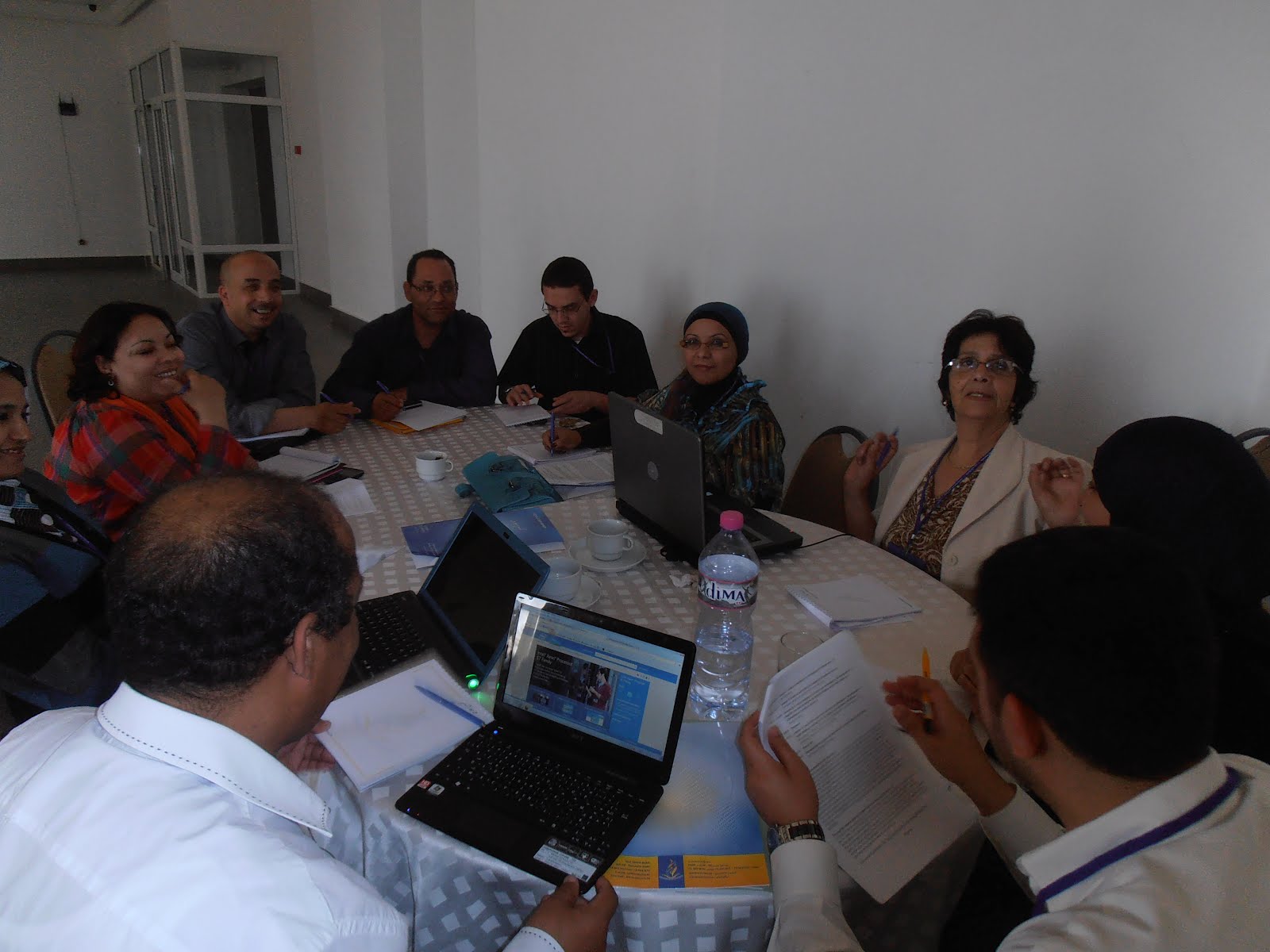
  GrandIR has just taken part in the 'Atélier sur les archives ouvertes' organised last week (May 14-15) in Monastir, Tunisia, by EIFL for promotion and dissemination of Open Access and Open Archives in the Maghreb countries. This workshop was held in the framework of the European Tempus ISTeMag Project for improving access to Scientific and Technical Information in the Maghreb universities. Led by the Université Libre de Bruxelles, this project features twelve universities and research centres in Tunisie, Algeria and Morocco among its partners. As a consequence, the Open Archives workshop in Monastir was well attended by over 30 Maghrebi librarians, developers, research officers, project coordinators and policymakers from all three countries.

Iryna Kuchma, EIFL Open Access Programme Manager, designed a comprehensive programme for the event along with the Tempus project coordinators. The programme covered all aspects of Open Archives, from its benefits to research activity to the obstacles faced for seting them up, from the strategies to develop a repository to copyright, marketing, policies and best practices. In order to provide the expertise, EIFL recruited a few European colleagues who delivered presentations and acted as facilitators for the group debates. Among these experts were Jean-François Lutz, Head of Digital Library at the Université de Lorraine and Pablo de Castro, Director of GrandIR.

There were several group sessions along the 2-day event, in which representatives of various professional profiles from different institutions -and often different countries- engaged in a lively debate and discussed their complementary approaches to specific aspects of Open Access policies, content gathering or marketing activities. Since ISTeMag has already held previous meetings to examine the different aspects of access to scientific and technical information (the most recent one took place last November in Algiers), workgroups discussions were in some sense a follow-up to a more general debate on access.

A Moroccan colleague kindly shared a ranking of universities in the Maghreb countries along the event - featured below. It's interesting to see that there are six Tunisian universities in the top ten, and that three of these top ten-ranked universities are partners in the Tempus ISTeMag Project (two Tunisian, Sfax and Monastir, and one Moroccan one, Marrakesh-Cadi Ayyad). It's also worth mentioning that having an open archive or institutional repository in place will significantly improve the position of a university in these rankings (see also in this regard the Top Africa section in the Web Ranking of World Universities released every six months by the CCHS-CSIC Cybermetrics Lab in Madrid, in which Maghreb universities could probably do better in a global African context).


There are already a few running Open Access repositories in Maghreb countries, with many more in project or in pre-production stages, but there is still a long way to go until the region reaches the level of infrastructure available in other countries in the continent such as Egypt, Ghana or Kenya. The main effort in terms of research output Open Access dissemination is currently being made on theses and dissertations. In fact the three national coordination organisations, the IMIST (Institut marocaine de l'information scientific et technique) in Morocco, the CERIST (Centre de Recherche en Information Scientifique et Technique) in Algeria, and the CNUDST (Centre National Universitaire de Documentation Scientifique et Technique) in Tunisia have already started building their national platforms for dissertations: Toubk@l in Morocco and in-progress platforms for Tunisia and Algeria. This policy of focusing on theses has similarly been aplied at European universities, but then repository managers should keep in mind they're aiming to collect research papers and other high-value institutional research outputs as well, so their visibility will be enhanced as a result. Dissertations being intellectual property of the universities and not always requiring to ask researchers for their permission for offering them online, part of the challenges of Open Access dissemination are rather easily tackled, but then there is no Open Access advocacy carried out and it won't be so easy to extend content gathering to the materials most valued by researchers everywhere.

Efforts like the Tunisian E-doc Université Virtuelle de Tunis (UVT) EPrints-based repository or the Algerian Dépot Numérique de l'Université d'Alger DSpace-based archive are pioneering IR initiatives that are also being mirrored in many other institutions in the Maghreb. As a consequence of the work of this ISTeMag Group on Open Archives, a network of institutional repositories in the Maghreb universities could soon be available.